

 News
News Views: 0 Author: Site Editor Publish Time: 2026-06-14 Origin: Site


The transition from standard maritime travel to bespoke, ultra-premium experiences requires a strategic approach to vessel selection. You cannot simply rely on glossy brochures to guarantee a flawless journey. Whether chartering for a high-stakes corporate retreat or purchasing for multi-generational family use, matching the physical and technological features to your specific use case is critical. You need an environment tailored exactly for your unique lifestyle.
Successfully evaluating a luxury yacht requires looking far beyond superficial aesthetics. You must assess functional entertainment infrastructure, technological reliability, operational realities, and crew capabilities. In this comprehensive guide, we will explore how to analyze these elements carefully. You will learn to prioritize features guaranteeing unparalleled maritime experiences tailored to your precise travel demands.
Use-Case Alignment: Feature priorities must be dictated by your primary goal, whether that is high-capacity luxury entertainment, remote expedition travel, or wellness-focused retreats.
Technological Reliability: Enterprise-grade maritime connectivity and smart automation are no longer optional for seamless travel.
Operational Risk Mitigation: A yacht’s draft, maintenance history, and crew-to-guest ratio drastically impact the feasibility of your itinerary and quality of service.
Vetting Protocol: Evaluating a vessel requires rigorous shortlisting criteria, relying on verified specifications and crew profiles rather than generalized marketing materials.
Establishing non-negotiable criteria based on your intended maritime experience serves as the absolute foundation of your search. You must align vessel specifications directly to your planned itinerary. A Mediterranean island-hopping campaign demands vastly different capabilities compared to a trans-oceanic crossing. For coastal cruising, expansive outdoor decks and open-air lounging dominate the priority list. Conversely, high-latitude expeditions require ice-classed hulls, advanced stabilization, and massive provision storage. You should clearly define your primary travel objectives before reviewing any general arrangement plans. We recommend listing your top three travel destinations. Use these locations to filter out vessels lacking the specific geographic capabilities you need.
Evaluating Gross Tonnage (GT) provides a more accurate predictor of comfort than overall length (LOA) alone. Many buyers mistakenly equate a longer hull to a more spacious interior. However, LOA only measures end-to-end physical distance. GT measures total internal volume. You might view a sleek 50-meter sport vessel boasting 499 GT. Then, you step aboard a 50-meter explorer vessel boasting 850 GT. The latter offers nearly double the interior living space. Layout flow also heavily dictates everyday comfort. Look for logical transitions between indoor salons and outdoor dining areas. Pay attention to ceiling heights in the main salons. Higher ceilings drastically reduce the feeling of confinement during extended voyages.
Hull design and draft directly dictate which hidden bays, shallow reefs, or specific marinas the vessel can access. Draft represents the vertical distance between the waterline and the lowest point of the hull. A deep draft provides excellent stability in rough open oceans. However, deep drafts strictly limit your access to shallow cruising grounds like the Bahamas. If your goal involves anchoring mere feet from a pristine private beach, you absolutely need a shallow draft. If you plan to dock stern-to in glamorous ports like Port Hercule, verify the vessel meets strict marina length restrictions. Ignoring these dimensional constraints often leads to forced anchoring miles away from your desired onshore destinations.
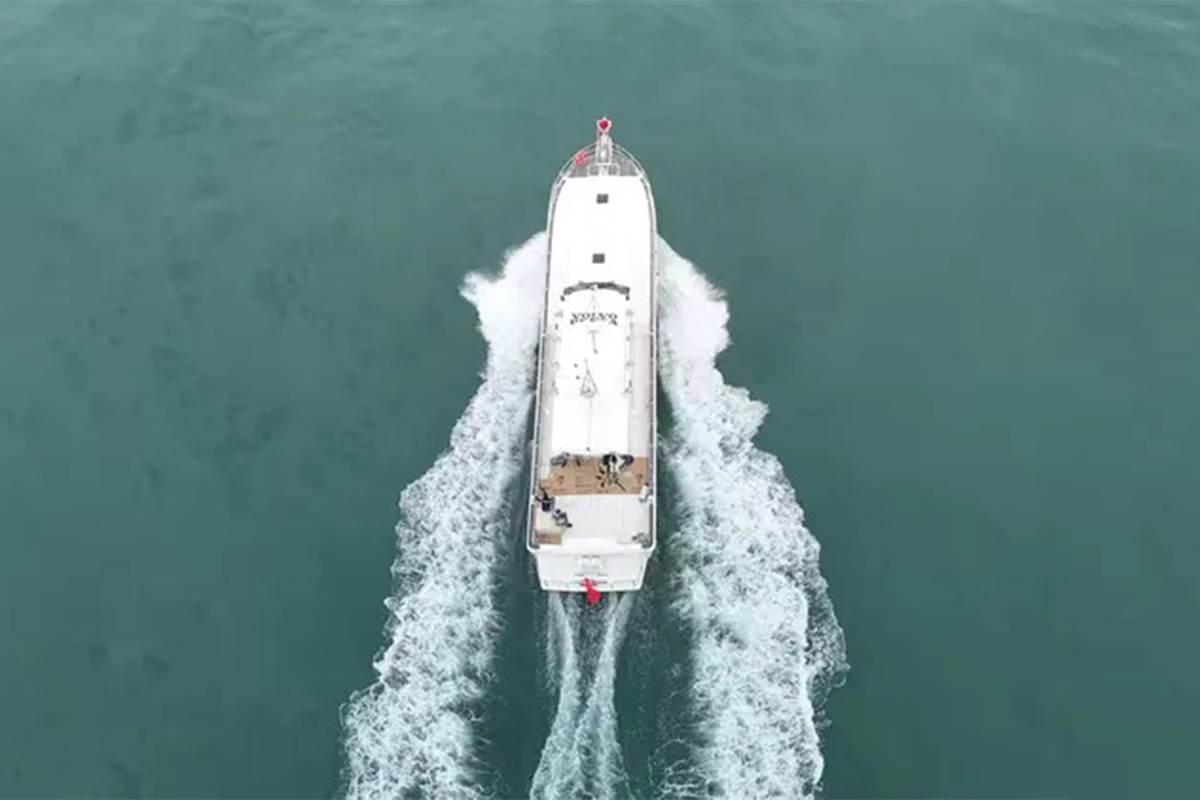
The aft deck has quickly transformed into the most critical zone for daytime socializing. You must evaluate modular swim platforms, fold-out balconies, and direct water access. Modern beach clubs seamlessly blend indoor air-conditioned lounges into expansive ocean-level patios. These fold-out sections increase the usable beam of the vessel significantly. Assessing tender garages and toy inventories proves vital for active luxury entertainment. You should review the vessel’s watercraft inventory strictly to ensure it meets your active lifestyle demands.
Look for these essential premium water toys:
Personal multi-passenger submersibles for deep-sea reef exploration.
High-speed enclosed chase boats for dry, rapid transit to shore.
Motorized carbon-fiber surfboards (e-foils) for zero-emission fun.
Inflatable modular climbing walls and netted ocean pools.
Zoning spaces for large-scale entertaining versus intimate privacy transforms the onboard experience. You need dedicated areas catering to entirely different moods and times of day. Evaluate separate owner’s decks guaranteeing total seclusion from guest areas. Many premium vessels feature convertible helipads transitioning seamlessly into al fresco dance floors or open-air cinemas. The physical flow of service corridors remains equally important. Dedicated crew passageways ensure staff can operate unseen. They deliver impeccable culinary service without interrupting private guest conversations. Excellent acoustic insulation between these service corridors and guest cabins is mandatory.
Premium maritime travel has moved far beyond cramped, windowless gym equipment rooms. You should evaluate fully dedicated wellness decks. Look for designated massage rooms, hydrotherapy plunge pools, and authentic steam hammams. Medical-grade wellness technology now features prominently on elite charter vessels. You might find hyperbaric oxygen chambers, cryotherapy suites, and advanced Pilates reformer studios. Assessing these amenities ensures your floating retreat rivals the best land-based luxury spas. Furthermore, verify the vessel employs crew members specifically licensed to operate these advanced wellness systems safely.
You can no longer accept spotty, unreliable internet while traversing the oceans. Verifying the presence of LEO (Low Earth Orbit) satellite systems is practically mandatory today. Systems like Starlink Maritime provide high-speed, low-latency internet literally anywhere on earth. You must combine these modern LEO setups alongside multi-band VSAT for fail-safe redundancy. This integrated hybrid approach guarantees uninterrupted remote work capabilities. It ensures seamless high-bandwidth video streaming across dozens of guest devices simultaneously.
Assessing centralized control systems for climate, lighting, and entertainment ensures effortless daily living. You should expect intuitive tablet controls uniformly installed across all decks and staterooms. A single touch should adjust the room ambiance, deploy blackout window shades, and queue custom playlists. Outdated audio-visual systems often lead to incredibly frustrating user experiences. Confirm the vessel uses modern, enterprise-grade processors to handle complex audio-visual demands without lagging.
High-profile travelers require uncompromising, invisible security protocols. Evaluating onboard cybersecurity for guest networks rigorously protects sensitive corporate or personal data. Discrete physical security layouts allow protective details to operate efficiently without crowding guests.
Consider this comparison between standard and elite technological configurations:
System Type | Standard Specification | Premium/Elite Specification |
|---|---|---|
Connectivity Hardware | Single VSAT Dome | Dual LEO (Starlink) + VSAT Redundancy |
Privacy & Security | Basic Router Firewalls | Air-gapped Guest Networks & Anti-Drone Tech |
AV Control Interfaces | Individual Remote Controls | Centralized iPad Crestron Integration |
Physical architectural features are only as good as the crew operating them. You must verify the presence of specialized, highly trained personnel. Look for Michelin-trained chefs, certified technical dive masters, and licensed wellness therapists. The crew-to-guest ratio directly dictates the level of personalization you receive daily. A strict 1:1 ratio ensures intuitive, hyper-responsive service. Anything less might compromise the premium nature of your journey during peak dining hours.
Understanding how to review a yacht’s refit history helps you avoid catastrophic mechanical disruptions. Commercial-grade vessels require major structural surveys every five years. You must review the maintenance logs to ensure full compliance utilizing the latest safety regulations. A freshly painted superstructure means nothing if the main generators remain outdated. Requesting verifiable class society records proves the vessel operates safely. Look closely at the maintenance history of zero-speed stabilizers. These devices prevent the boat from rolling uncomfortably while anchored.
Evaluating hybrid propulsion systems and advanced wastewater treatment remains highly crucial. Many pristine global cruising grounds now enforce incredibly strict environmental access regulations. Dynamic positioning (DP) allows a vessel to hover steadily in place using GPS and thrusters. This technology completely prevents heavy anchor damage to sensitive coral reefs. Vessels featuring zero-discharge wastewater systems and high-capacity battery banks easily access these environmentally protected travel zones. Such systems also eliminate noisy generator hum during overnight stays.
Learning how to cross-reference brochure promises requires a skeptical, detail-oriented approach. Marketing materials naturally highlight absolute perfection. You must actively seek out recent survey reports and independent broker walkthroughs. Reviewing historical charter feedback uncovers the unvarnished truth about a vessel's actual performance. Past guests rarely hide their frustrations regarding poor air conditioning or slow meal service. Always demand recent video walkthroughs rather than relying on five-year-old staged photography.
The importance of reviewing specific functional documents before signing a contract cannot be overstated. You need hard, verified evidence of maritime capability.
Follow this structured documentation request sequence during your vetting process:
Demand updated crew CVs to verify specialized culinary or technical maritime training.
Request detailed sample menus tailored strictly to your exact dietary preferences.
Ask for verified internet speed test logs recorded during recent offshore passages.
Review the active water toy inventory to confirm all equipment remains fully functional.
Engaging a qualified broker requires handing over your clearly defined feature matrix immediately. This vital step allows them to generate a highly curated shortlist of vessels. They match these specific vessels exactly to your luxury entertainment and travel criteria. Never settle for a generic list of available ships. Demand a tailored, comprehensive presentation highlighting exactly how each option fulfills your specific itinerary needs.
A highly successful ultra-premium maritime experience hinges strictly on precise alignment. You must expertly combine bespoke onboard features, robust technological infrastructure, and superior crew execution. Glossy interior aesthetics alone will never guarantee a flawless journey across the open ocean. Focus heavily on layout flow, draft restrictions, and enterprise-grade connectivity to ensure total guest satisfaction.
We strongly encourage you to finalize your non-negotiables list immediately. Initiate the rigorous vetting process well in advance of your target travel dates. Securing peak-market vessels requires proactive planning, extensive due diligence, and strict adherence to your established baseline requirements.
A: For authentic ultra-premium service, you should seek a strict 1:1 crew-to-guest ratio. This ensures immediate attention, personalized culinary experiences, and seamless daily operations. Specialized vessels may require even higher ratios to accommodate dedicated wellness therapists, security personnel, and dive instructors.
A: Do not accept verbal assurances. Request verified internet speed test logs taken during recent offshore passages. Confirm the exact hardware installed on board. Look specifically for dual LEO satellite systems like Starlink Maritime paired seamlessly with multi-band VSAT redundancy.
A: Standard inventories include jet skis, basic paddleboards, and snorkeling gear. Premium inventories elevate the experience significantly. They feature motorized surfboards (e-foils), high-speed enclosed chase boats, personal deep-sea submersibles, and inflatable modular ocean pools attached to the beach club.
A: Draft directly dictates accessibility. A deep draft provides excellent stability in rough ocean crossings but prevents entry into shallow regions like the Exumas. A shallow draft allows you to anchor safely in secluded bays and hidden coastal reefs.
A: LOA simply measures the vessel from bow to stern in meters or feet. Gross Tonnage (GT) measures the total internal volume. GT provides a far more accurate representation of actual living space, ceiling heights, and overall guest comfort.


