

 News
News Views: 0 Author: Site Editor Publish Time: 2026-05-27 Origin: Site


Many buyers chase a fantasy when entering the boat market. They imagine a perfect all-in-one vessel. They want a boat capable of hardcore offshore fishing, luxury entertaining, and family water sports. Unfortunately, this myth rarely survives actual time on the water. Misaligning your boat’s primary design and your actual weekend reality leads to serious frustration. You risk heavy buyer’s remorse. You face chronic underutilization. You also incur bloated, unnecessary maintenance tasks.
A successful acquisition requires ruthless prioritization of real-world use cases. You must understand key operational thresholds. Decide early if you want to be an owner-operator. Alternatively, you might plan to hire a professional crew. You also need to map the right hull shape to your chosen local waters. By defining your primary goals early, you can confidently narrow your search. This guide will help you navigate hull types, size categories, and environmental constraints. You will learn how to choose a vessel uniquely suited to your lifestyle.
Your actual time-on-water allocation (fishing vs. family cruising) should dictate hull shape and deck layout, not aesthetics alone.
The 60-foot mark acts as the standard industry threshold between an owner-operator vessel and one requiring a professional captain.
Total Cost of Ownership (TCO) extends far beyond purchase price; expect annual operating costs to average 10–15% of the yacht’s total value.
Physical constraints—like maximum legal trailering widths (typically 8.5 feet) and destination draft limits—must precede your model selection.
Begin your buying journey by applying the 80/20 rule of boating. Evaluate how you will actually spend 80 percent of your time. Buyers often purchase a boat based on a rare fantasy trip. They imagine crossing oceans or fighting giant marlin. In reality, they spend most weekends anchored at a local sandbar. Do you spend 80 percent of your time anchored alongside family? If so, a fishing-first layout compromises everyday comfort. You will lack ample seating. You will miss shaded lounge areas.
Every boat design represents a series of physical compromises. You cannot cheat water dynamics or hull geometry. We call this the Trade-off Matrix. You must decide which features matter most for your crew. Many inexperienced buyers suffer from "three-foot-itis." They constantly desire a boat three feet larger after just one season. You can prevent this costly cycle by brutally assessing your needs today. Look closely at the deck layout. Does it support your primary activity?
Understanding these trade-offs helps you avoid common purchasing mistakes. Use this breakdown to evaluate your priorities.
Design Choice | Advantage | Disadvantage |
|---|---|---|
High-Performance Fishing Setup | Maximum deck space for 360-degree fishability. | Sacrifices interior cabin volume and comfortable lounging zones. |
Comfortable Family Hull | Spacious, climate-controlled interiors and ample seating. | Restricts deck movement and lacks specialized fishing amenities. |
Wide-Beam Vessel | Superior anti-roll stability to prevent family seasickness. | Lacks the aggressive speed of narrow offshore hulls. |
Deep-V Offshore Hull | Cuts smoothly through rough waves at high speeds. | Rolls heavily side-to-side when anchored or drifting. |
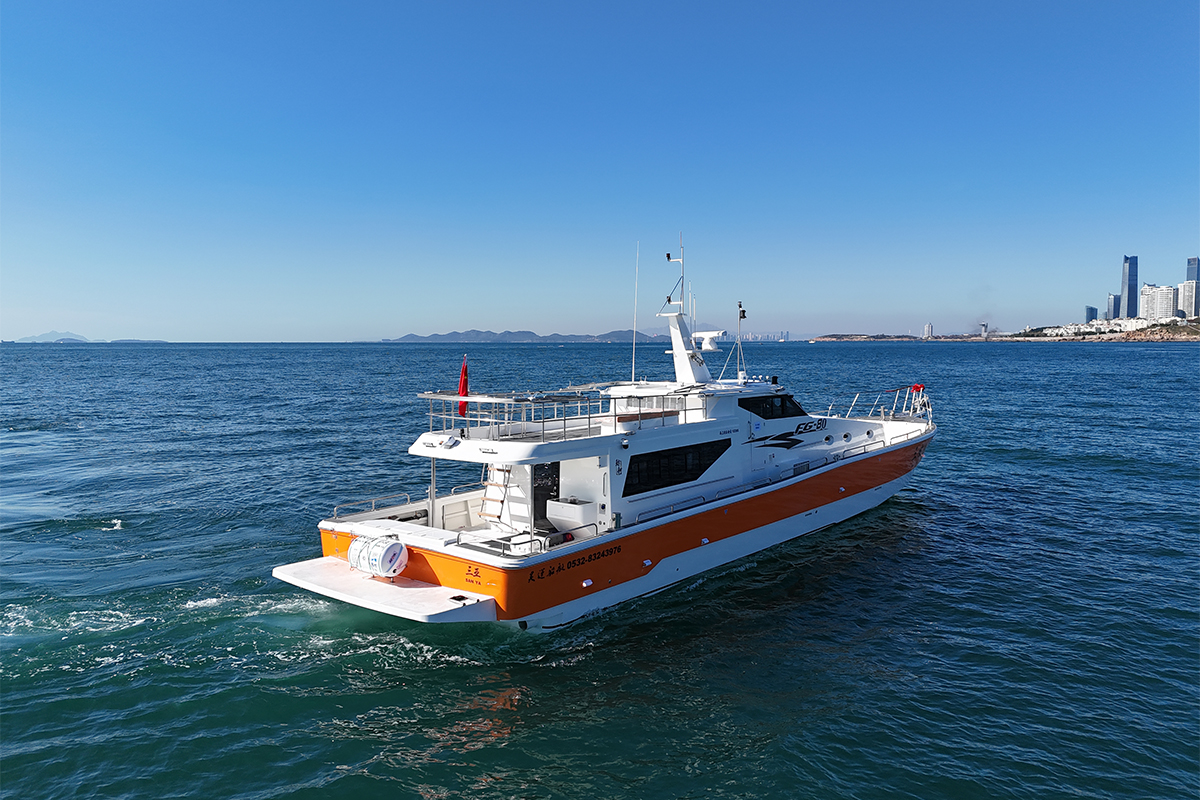
Selecting the right category is crucial. Your primary objective dictates the hull design.
Serious offshore anglers demand function over comfort. They need unobstructed access to the water. A sport yacht delivers this exceptionally well. Look at the hull's deadrise angle. Serious offshore hulls feature a 21 to 24-degree deadrise at the transom. This sharp angle cuts smoothly through rough, choppy waves at high speeds.
Why it works: These vessels offer 360-degree deck access. You get massive livewells and strategically placed rod holders. They feature powerful engine arrays. This ensures a rapid time-to-destination. You can outrun bad weather easily.
Limitations: You sacrifice significant climate-controlled cabin space. These models often lack overnighting comfort. Families might find the ride too exposed to wind and spray.
Ideal Buyer: This category suits buyers prioritizing speed and daytime utility. They value catching fish over multi-day luxury.
Best Practice: Look for models integrating gyro stabilizers. These devices reduce the notorious deep-V roll while trolling.
Families require distinct zones for relaxation and socializing. A cabin cruiser strikes the ultimate compromise here. They typically range from 26 to 45 feet. They usually utilize a modified-V hull. The deadrise flattens out to 17 or 19 degrees near the transom. This flatter profile increases fuel efficiency. It also dramatically improves lateral stability when the boat stops moving.
Why it works: They feature enclosed heads and functional galleys. You get dedicated sleeping quarters for weekend trips. The helm area usually includes hardtop weather protection. Pontoon boats offer incredible deck space for inland lakes.
Limitations: Cruisers are heavier and slower than open day-boats. They require higher fuel consumption. Pontoons perform poorly in rough offshore conditions.
Ideal Buyer: Families needing overnight capability choose this class. They demand climate control and safe lounging spaces.
Common Mistake: Do not buy a family boat based solely on bed count. Evaluate the ventilation and natural light inside the cabin instead.
Long-distance traveling requires an entirely different vessel class. You must sustain life comfortably for weeks. A true luxury yacht acts as a floating resort.
Why it works: They boast multi-stateroom layouts. You benefit from onboard water-makers and heavy-duty stabilizers. Long-range fuel capacities allow you to bypass expensive marinas. They handle rough seas beautifully.
Limitations: This tier presents a very high barrier to entry. They require deep-water slips. You must adhere to strict maintenance schedules.
Ideal Buyer: High-net-worth individuals dominate this category. They focus on weeks-long regional cruising. They often use the vessel for corporate entertaining.
Size changes everything in boating. It alters how you drive, dock, and transport the vessel. A larger Yacht demands advanced logistical planning.
Under 40 Feet (The Trailerable and Day Limit): Road transport defines this size bracket. You must consider physical highway realities. Exceeding an 8.5-foot beam generally requires special wide-load permits. Towing larger vessels requires heavy-duty trucks. You must check state towing regulations carefully. Most states require independent braking systems on multi-axle boat trailers. You must perform strict preventative maintenance. Saltwater quickly degrades trailer wiring and brake calipers. These boats are ideal for day trips. A solo operator or a couple can handle them easily.
40 to 59 Feet (The Owner-Operator Sweet Spot): This represents the maximum size for an experienced owner. You do not need a mandatory crew here. Modern technology makes docking highly intuitive. Joystick piloting systems provide precise maneuverability. Bow thrusters assist during heavy crosswinds. This size offers enough space for two to eight people. You can comfortably cruise for a long weekend. It balances interior volume and manageable operation perfectly. You will deal with diesel engines, generator sets, and marine air conditioning. Owners must learn basic diesel troubleshooting here.
60+ Feet (The Captain and Crew Mandate): Crossing the 60-foot mark shifts the operational dynamic significantly. Systems become incredibly complex. You rely heavily on hydraulic systems. You have chilled-water air conditioning loops. Stabilizers require precise calibration. Insurance policies will often require a licensed captain. You must prove extensive sea time to operate it alone. Bringing crew aboard alters your personal privacy. It also introduces ongoing staffing logistics. You must provide dedicated crew quarters. You are now running a small commercial enterprise.
Where you boat matters just as much as how you boat. Your destination imposes strict physical constraints on your vessel choice.
Draft refers to the hull portion sitting below the waterline. A deep draft limits your access to popular shallow-water destinations. The Bahamas or the Florida Keys present notorious navigation challenges. These regions often require drafts under five feet. If you buy a deep-draft vessel, you will frequently run aground. You will be restricted to main shipping channels. Always verify local bathymetric charts before finalizing a hull style.
Do not forget about air draft. This is the vertical distance from the waterline to the vessel's highest point. Fixed bridges along popular routes present absolute barriers. The Intracoastal Waterway features many bridges with strict 65-foot clearance limits. Tall radar arches, tuna towers, and communication antennas easily exceed these limits. Measure your air draft carefully. You must know your absolute height limit before plotting a route.
Finding a place to park your boat presents a massive hurdle. Many buyers ignore this until after the purchase.
Marina slips for boats over 50 feet remain incredibly scarce.
Waitlists in prime coastal areas can span several years.
Premium sizing carries premium pricing.
Homeowner association docks enforce strict length limits.
You must also evaluate the electrical infrastructure in marinas. Large vessels require 50-amp or even 100-amp shore power connections. Older marinas only provide 30-amp service. This limits your ability to run air conditioning units dockside. You must secure slip availability before signing a purchase agreement. Otherwise, you might own a vessel without a legal parking spot.
You must match the optimal cruising range to your itinerary. Fuel consumption scales aggressively as length increases. Smaller vessels typically burn 5 to 15 gallons per hour. Conversely, large vessels can easily burn 30 to 80 gallons per hour. Check the usable fuel capacity, not just the total tank volume. You must always hold 10 percent of your fuel in reserve for safety. Calculate the distance between fuel docks on your preferred routes. Ensure your chosen model covers this distance comfortably at cruising speed.
Choosing the ideal vessel requires honest self-reflection and careful logistical planning. You must navigate a complex web of competing priorities. The perfect boat for one family will be a nightmare for another.
Determine the 80 Percent Use Case: Stop buying for the rare fantasy trip. Buy the boat matching your most frequent weekend activity. Prioritize family comfort over specialized offshore capabilities if you mostly anchor at local sandbars.
Measure Infrastructure Limits First: Do not fall in love with a model before checking marina availability. Verify slip dimensions, draft restrictions, and shore power requirements in your home port.
Select the Proper Hull: Once you map your constraints, choose the hull design. Match the deadrise angle and beam width to your expected sea conditions.
Step Away from the Spec Sheets: Paper statistics never tell the full story. You cannot feel a boat's stability through a brochure.
Validate Through Sea Trials: Book a charter in the exact class of vessel you are targeting. Bring your family along to test the layout. Verify they feel safe and comfortable underway.
A: The 30 to 45-foot range is ideal for beginners. These vessels offer enough stability for coastal cruising while remaining highly manageable. Modern boats in this class feature joystick piloting and bow thrusters. These technologies make docking significantly easier. You can operate them safely without a professional crew. They also fit comfortably into most standard marina slips.
A: You can casually fish from them, but it involves significant compromise. These vessels lack clear 360-degree deck space. You will fight over tall transoms and plush seating. They rarely feature specialized raw-water washdown systems or high-capacity livewells. Fishing gear can easily damage the teak decks and luxury upholstery. They are best suited for light, occasional bottom fishing.
A: A professional captain is generally not required for a 50-foot vessel. Most insurance companies allow owner-operation if you have verifiable sea time. You must provide a personal experience log. However, if you are stepping up from a much smaller boat, insurers may mandate professional training. Hiring a captain for your first few trips is highly recommended.


