

 News
News Views: 0 Author: Site Editor Publish Time: 2026-08-01 Origin: Site


In high-stakes maritime environments, precision remains entirely non-negotiable. Utilizing the wrong vessel for a critical task compromises safety instantly. It violates strict maritime regulations and incurs severe operational delays. Every second counts when managing immense cargo ships across busy harbors. While both vessels fall under the broader category of a commercial marine platform, their core designs differ. Their engineering, operational mandates, and regulatory compliance standards remain entirely distinct.
This guide breaks down the architectural, functional, and procurement differences deeply. We analyze the contrast between towing vessels and transit vessels directly. We provide fleet managers and port authorities an evidence-based evaluation framework. You can use it to streamline vessel evaluation and daily deployment. Understanding these boundaries protects your crews while maximizing fleet efficiency.
Primary Function: Tug boats are engineered for maximum torque and maneuverability to push or tow large vessels; pilot boats are built for speed, stability, and the safe transit of personnel.
Key Metrics: Tug boat evaluation relies on Bollard Pull and engine displacement, whereas pilot boat evaluation prioritizes hull speed, seakeeping, and specialized boarding deck configurations.
Regulatory Scrutiny: Pilot transfer operations are heavily regulated by international standards (e.g., SOLAS, IMPA); substituting a standard work boat for a dedicated pilot boat introduces severe liability risks.
Procurement Focus: Fleet shortlisting must align strictly with specific port bottlenecks—whether the deficit lies in physical vessel handling (Tug) or navigational personnel logistics (Pilot).
Every busy harbor relies heavily on seamless port operations. Mega-ships simply lack maneuverability in tight coastal waters. Modern container vessels and supertankers need immense physical assistance. Tugs provide this crucial external force reliably. They assist inbound and outbound ships during complex berthing sequences. They also guide massive hulls safely through narrow, congested channels.
Their operational goal is straightforward but physically demanding. Success depends entirely on absolute control. You must manage immense deadweight tonnage safely at all times. Fast turnarounds at the dock define a successful and profitable harbor. Therefore, operators judge a tug boat primarily by its pulling power. Delays cost shipping lines millions in lost revenue. Tugs eliminate these delays through brute force and navigational precision.
The marine navigational expert plays a totally different role. Their job requires extensive local navigational expertise. A local expert boards the mega-ship directly before it docks. They take over navigational command through tricky local waterways. Moving these specialists requires extreme care and specific hull designs. The personnel transport vessel handles this precise logistical task daily.
Its operational goal revolves entirely around human logistics. Operators transport highly specialized personnel safely between shore and sea. Success means executing a flawless pilot transfer under any condition. Pilots often board ships in highly aggressive sea states. They routinely face adverse weather and massive ocean swells. The transport vessel must remain perfectly stable alongside moving steel walls.
Naval architects design these hulls for completely opposing realities. Towing vessels feature exceptionally deep drafts. They employ highly specialized omnidirectional propulsion systems. Common setups include Azimuth Stern Drives (ASD) or Voith Schneider Propellers. These systems direct maximum thrust in any direction instantly. Their massive engine-to-hull ratios focus entirely on low-speed torque. Top speed rarely matters in this specific application. Raw pushing power dictates the fundamental engineering choices.
Conversely, rapid personnel transport demands smooth, high-velocity travel. Planners utilize semi-displacement or specialized planing hulls. Builders construct these platforms using marine-grade aluminum or advanced composites. These materials reduce overall vessel weight significantly. The pilot boat must cut through rough waves rapidly and smoothly. They routinely operate at speeds of 20 to 30 knots. High speed ensures experts reach inbound ships without causing scheduling delays.
Deck layouts reveal the true purpose of each marine hull. A towing vessel focuses heavily on mechanical gear. Heavy-duty towing winches dominate the entire aft deck. Massive hawser bitts secure extremely thick tow lines. Thick, energy-absorbing cylindrical rubber fenders wrap around the bow. Operators expect direct, aggressive ship contact daily. The fendering system absorbs immense crushing forces easily.
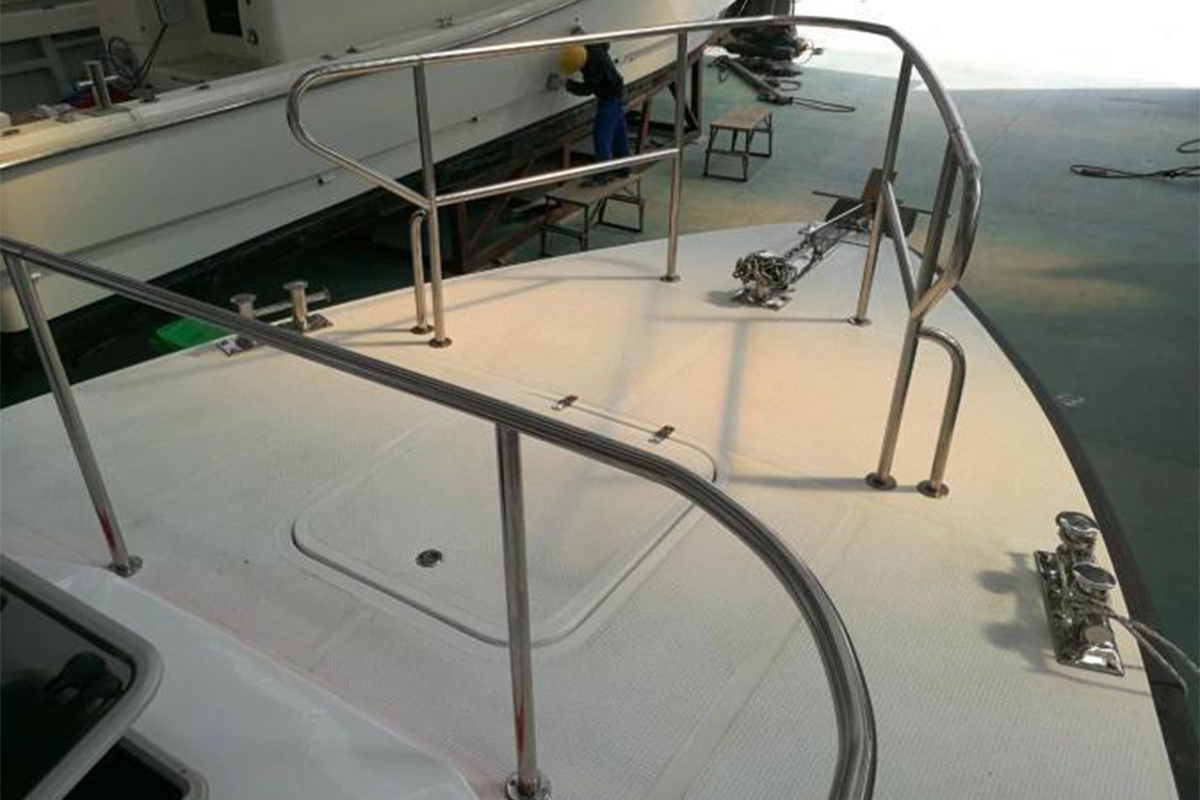
Transfer vessels prioritize human safety above all other metrics. They feature specially heated decks to prevent dangerous ice accumulation. Specialized boarding handrails give personnel secure grip points outside. Man Overboard (MOB) recovery systems stand ready for critical emergencies. Targeted sheer fenders prevent hull damage during fast alongside boarding. The captain matches speed alongside the mega-ship perfectly. The expert then steps onto the boarding ladder safely.
Vessel Specifications Summary
Design Parameter | Towing Vessel | Transit Vessel |
|---|---|---|
Hull Form | Deep draft, displacement hull | Planing or semi-displacement hull |
Top Speed | 10–14 knots | 20–30+ knots |
Propulsion | ASD or VSP (Torque focus) | Waterjets or twin straight shafts (Speed focus) |
Deck Priority | Winches, bitts, clear aft deck | Heated walkways, rescue zones, handrails |
You must understand the distinct navigational hierarchies at play. A tug captain commands the towing vessel itself. They execute strict orders from the local expert or ship master. Conversely, the harbor pilot boards the mega-ship directly from the water. They take temporary command of its entire navigation. They guide the massive ship safely through dangerous local waters. Their hyper-local knowledge prevents devastating groundings and collisions.
Authorities heavily regulate these maritime activities globally. You must evaluate transfer vessels against strict international maritime codes. The International Maritime Pilots' Association (IMPA) sets precise boarding standards. SOLAS Chapter V dictates exact boarding arrangements and ladder specifications. These rules protect human lives during incredibly vulnerable physical transfers.
Classification societies regulate towing vessels quite differently. They focus entirely on structural integrity and maximum towing limits. Rules emphasize certified bollard pull ratings and stability under tow. Inspectors ensure the winch systems can handle extreme tensile loads.
Substituting a standard Work Boat for personnel drops creates massive liability. Using an ad-hoc vessel voids safety compliance immediately. It exposes port operators to extremely heavy fines. You risk severe legal liability during a fatal MOB incident. Never ignore these strict international compliance frameworks.
Best Practice: Always verify SOLAS certification for boarding deck rails and recovery zones before deploying a vessel for human transport.
Common Mistake: Assuming any flat deck with decent speed serves as a legally valid boarding platform.
Smaller harbors sometimes face severe and restrictive budget constraints. They occasionally use towing vessels to drop off local experts. We call this dangerous compromise the "make-do" scenario. It represents a common but deeply hazardous operational reality. Managers try to save money by consolidating tasks into one hull.
This workaround introduces severe daily hazards for the crew. Towing hulls simply lack the necessary top speed. This delays harbor schedules significantly and frustrates shipping lines. Furthermore, their deck heights rarely match standard boarding ladder requirements. They lack the specialized railing needed for secure human transitions. The massive cylindrical fendering creates a remarkably high risk of crushing. The expert faces extreme physical danger during alongside maneuvers.
Speed Deficits: Towing engines often overheat during sustained high-speed transit runs.
Deck Height Mismatch: Transferring requires steep, unsafe climbing angles for personnel.
Crush Hazards: Oversized towing fenders easily trap personnel against the ship hull.
Poor Seakeeping: Deep draft designs roll uncomfortably when running parallel to ocean swells.
Fleet managers should avoid hybridizing these distinct functions entirely. Sometimes ports utilize a specifically certified multi-role vessel. However, these hybrids inevitably sacrifice peak performance in both categories. You get a mediocre towboat and a sluggish transfer platform. Dedicated designs always yield superior safety and long-term efficiency.
You must audit your current maritime operations thoroughly. Determine your exact resource gaps first before writing an RFP. Do you face high congestion and slow berthing times? If so, prioritize immediate towing acquisition or chartering. Do navigational delays stem from slow personnel transit? Then you must prioritize fast transit vessel investments. You must deploy capital exactly where operational bottlenecks occur.
Track your average wait times for inbound mega-vessels.
Analyze weather-related transit delays causing harbor backlogs.
Measure daily fuel consumption rates across your current fleet.
Review recent safety incident reports regarding personnel transfers.
Financial planning requires understanding fundamental structural differences. Towing vessels demand massive initial capital expenditure (CapEx). They also incur high routine operational expenditure (OpEx). Their enormous engines burn significant fuel volumes daily. They require expensive, specialized dry-docking for azimuth drive maintenance.
Conversely, fast personnel transports require lower initial CapEx generally. However, they demand rigorous, high-frequency maintenance schedules. High-speed structural stress damages suspension systems and lightweight aluminum hulls. They require constant, specialized upkeep to maintain their safety certifications.
Establish a clear Request for Proposal (RFP) framework quickly. Focus strictly on bollard pull requirements for handling duties. Specify exact sea-state survivability metrics for human transports. Aligning technical specifications with operational reality prevents expensive procurement errors.
Both vessel types remain absolutely critical to the global maritime supply chain. However, their procurement pathways and operational evaluations share almost no overlap. Towing platforms resolve physical limitations, pushing immense steel through water. Transit platforms resolve logistical limitations, moving essential human expertise safely. Do not treat these complex assets as interchangeable commodities.
You must align your vessel type precisely with operational friction points. Choosing the right tool ensures strict regulatory compliance automatically. It protects your most valuable asset: human life. Finally, matching the hull to the specific mission maximizes your operational ROI and keeps harbor traffic flowing smoothly.
A: Yes, but it requires significant additional licensing. They must obtain extensive local knowledge certifications. It often demands years of specific sea time handling larger vessels. They must move from a standard master's license to a highly specialized pilotage endorsement. The transition is rigorous and highly regulated.
A: It is a broad commercial classification. It includes tugs, pilot boats, crew transfer vessels (CTVs), and offshore supply vessels (OSVs). Operators use them exclusively for heavy industry and logistics. They are never utilized for leisure or standard commercial passenger transport.
A: Highly visible colors are legally mandated. Operators use bright yellow, orange, or red. This ensures extreme visibility in poor weather conditions. It guarantees massive cargo ships can spot them easily. Visibility remains critical during high-risk alongside transfers in dense fog or heavy rain.


